Close
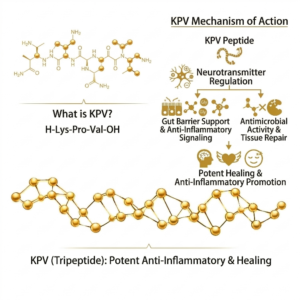
KPV functions as a cellular signaling modulator, meaning it does not override the immune system but instead helps regulate how inflammatory signals are expressed. Its primary mechanism involves interaction with the NF-κB pathway, a key regulator of chronic inflammation.
Research has shown that KPV may reduce pro-inflammatory cytokines such as TNF-alpha and IL-6, which are commonly associated with gut inflammation and systemic immune imbalance (https://pubmed.ncbi.nlm.nih.gov/18485909/).
Because of its small molecular size, KPV demonstrates strong bioavailability and the ability to penetrate cellular membranes efficiently. This allows it to act directly at the site of inflammation rather than relying on systemic distribution.
This targeted behavior is one reason KPV is often explored alongside compounds like LL-37 in Mexico, which supports antimicrobial defense, and BPC-157 in Mexico, which is studied for tissue repair.
One of the most studied applications of KPV peptide in Mexico is its role in gut health. Research has examined how KPV interacts with intestinal transport systems and reduces inflammatory signaling within the gut lining (https://pubmed.ncbi.nlm.nih.gov/18332135/).
This makes KPV highly relevant in research involving:
Because of this, KPV is often considered alongside BPC-157, which is also studied for gut and tissue repair.
KPV is also studied in dermatological contexts for its ability to regulate inflammatory pathways in the skin. Unlike steroid-based approaches, KPV is explored as a non-suppressive signaling peptide that may support skin recovery and balance.
Research has examined its role in inflammatory skin conditions and wound repair, particularly in relation to cytokine modulation and cellular regeneration (https://pubmed.ncbi.nlm.nih.gov/14644315/).
This positions KPV as a complementary compound to GHK-Cu in Mexico, which is widely studied for skin regeneration and collagen signaling.
This is why KPV is often explored within broader immune strategies alongside compounds such as:
Together, these compounds represent different layers of immune system regulation within peptide-based research.
Within structured frameworks, KPV is rarely used in isolation. Instead, it is commonly explored as part of integrated peptide strategies that address multiple biological pathways.
For example:
These combinations reflect how peptides in Mexico are typically explored in layered systems rather than single-compound use.
For deeper context, reviewing Péptidos regenerativos provides additional insight into how repair-focused compounds interact with immune signaling pathways.
When evaluating KPV peptide in Mexico, quality is the most important variable. Differences in synthesis, storage, and handling can significantly impact consistency and reliability.
Key factors to evaluate include:
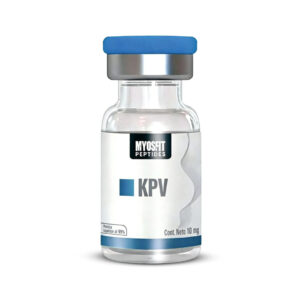
Myosfit KPV is produced in a COFEPRIS-registered laboratory, ensuring alignment with regulatory and quality standards required for professional research in Mexico.
Understanding sourcing is critical, which is why reviewing Buy peptides in Mexico is essential before comparing options.
KPV is studied across multiple delivery methods depending on the research focus:
Each method influences how the peptide interacts with target receptors and should be considered when evaluating application strategies.